Lower occupied volume
Compression can reduce package volume for selected structures.
Compression is not only a packaging step. The structure, materials, recovery behavior, carton, assembly and end-customer experience need to work as one system.
For suitable sofa constructions, compressed packaging can improve storage and shipping efficiency. Exact volume reduction and freight impact must be tested on the confirmed product and route.
Compression can reduce package volume for selected structures.
Plan carton handling, assembly and unboxing around direct-to-consumer delivery.
Evaluate how packaging dimensions affect container and last-mile economics.
Coordinate cartons, labels, manuals and customer-facing instructions.
The following workflow is designed to reduce surprises between sample approval and mass production.
Confirm frame, foam, fabric, support and assembly suitability.
Test compression method and shape recovery on the actual construction.
Review protection, carton size, instructions and accessory placement.
Observe recovery time, appearance and assembly after unpacking.
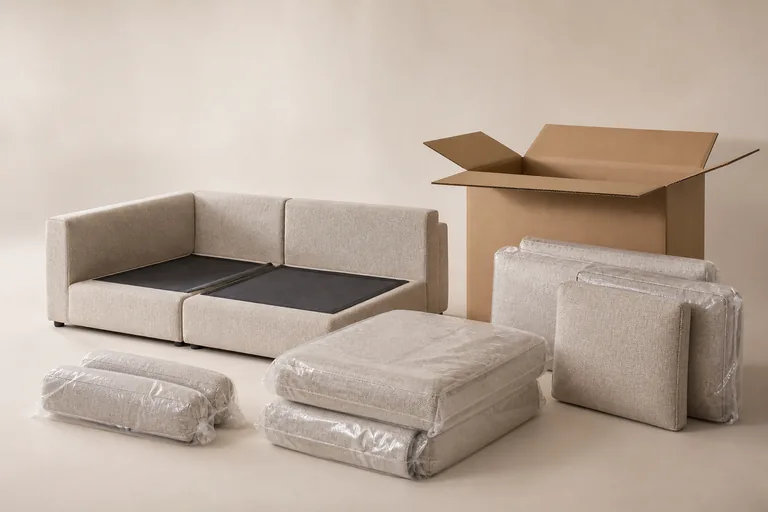
Before claiming savings, compare the confirmed standard pack and compressed pack using the same model, destination and logistics assumptions.
Send the current sofa dimensions, packing method, target market and expected volume. We can use that as the starting point for feasibility review.
For importers and online furniture brands, start with the model and sales channel. Compare the approved sample, carton specification and recovery instructions before committing to an order.
Confirm the foam construction, finished dimensions, unpacking procedure and acceptable recovery conditions for the selected model.
Request carton dimensions, gross weight, protection details and destination-specific delivery requirements. Shipping savings depend on the confirmed packing configuration.
Shortlist model codes from the collection and share your destination country, intended quantity and any parcel-size limits.